How to Start Freelancing Online in 2026: A Step-by-Step Guide
Start earning as a freelancer this month. This practical guide covers finding clients, setting rates, building a portfolio, and scaling your income.
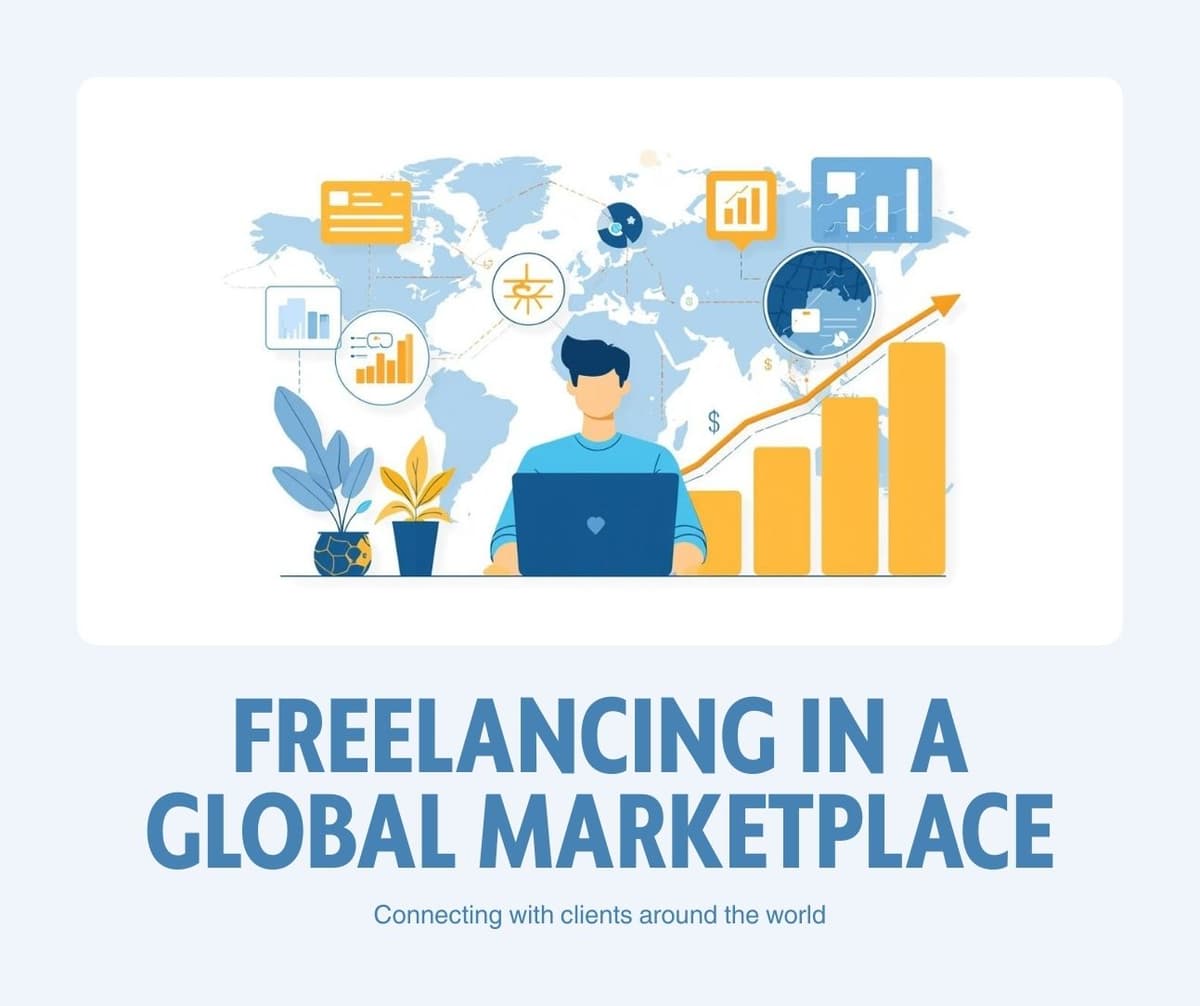
The fastest path to freelancing income in 2026 is to identify a skill you already have, create a focused profile on two to three platforms, deliver exceptional work for your first five clients at competitive rates, then raise your prices as reviews accumulate. Most new freelancers can land their first paid project within two to four weeks.
Freelancing is no longer a backup plan. It is a legitimate career path that offers higher earning potential, complete schedule flexibility, and the ability to work from anywhere. The freelance economy has grown to over seventy million workers in the United States alone, and the demand for skilled freelancers continues to outpace supply in many categories.
Step 1: Identify Your Marketable Skill
Every professional has at least one skill that businesses will pay for. The most in-demand freelance skills in 2026 fall into five categories: writing and content creation, design and visual media, web development and programming, marketing and advertising, and virtual assistance and operations.
You do not need to be the best in the world at your skill. You need to be good enough to deliver value to clients who either cannot do it themselves or do not have time. A competent writer who delivers on time is more valuable to most businesses than a brilliant writer who misses deadlines.
If you are unsure which skill to offer, ask yourself what tasks colleagues or friends regularly ask you to help with. That is often your most marketable ability.
Start with one specific service, not a menu of options. "I write SEO blog posts for SaaS companies" attracts more clients than "I do writing, editing, social media, and email marketing." Specialists earn more and get hired faster than generalists.
Step 2: Choose Your Platforms
For beginners, start with two platforms: one marketplace where clients come to you, and one outreach channel where you go to clients.
Upwork and Fiverr are the largest freelance marketplaces. Upwork works better for ongoing projects and higher-value contracts. Fiverr works better for productized services with clear deliverables and fixed prices. Choose the one that fits your service type.
For outreach, LinkedIn is the most effective channel for finding clients directly. Optimize your profile to highlight your specific freelance service, connect with potential clients in your target industry, and share content that demonstrates your expertise.
Step 3: Build a Portfolio Fast
You need proof of your skills, but you face the classic problem: you need a portfolio to get clients, but you need clients to build a portfolio. Here is how to solve it.
Create three to five sample projects that demonstrate your skill. If you are a writer, write three sample blog posts for fictional companies in your target niche. If you are a designer, redesign the homepage of three real websites as concept projects. If you are a developer, build three small projects that showcase your technical abilities.
These samples do not need to be commissioned work. They just need to demonstrate that you can produce quality output. Host them on a simple portfolio page or directly in your platform profile. Our Resume Builder can help you create a professional resume to complement your portfolio.
Step 4: Set Your Starting Rates
Research what other freelancers with similar experience charge for the same service. Set your initial rates slightly below the market average. This is not undervaluing yourself. It is a strategic decision to accumulate reviews and experience quickly.
The first five positive reviews on any platform dramatically increase your visibility and conversion rate. Once you have those reviews, raise your rates to market level. Continue raising rates by ten to fifteen percent every quarter as your reputation grows.
For reference, here are approximate starting rates for common freelance services in 2026. Blog writing ranges from eight to fifteen cents per word. Graphic design ranges from thirty to seventy-five dollars per hour. Web development ranges from fifty to one hundred dollars per hour. Virtual assistance ranges from twenty to thirty-five dollars per hour. Social media management ranges from five hundred to fifteen hundred dollars per month per client.
Step 5: Deliver Exceptional First Impressions
Your first five clients determine the trajectory of your freelancing career. Over-deliver on every project. Respond to messages within a few hours. Submit work before the deadline. Include a small bonus deliverable that the client did not expect.
This approach generates five-star reviews, which generate more clients, which generate more reviews. The compounding effect of excellent early reputation is the single most powerful growth driver on freelance platforms.
Step 6: Scale Your Income
Once you have consistent work and strong reviews, you have three paths to increase income. Raise your rates as demand increases. Specialize further into a higher-value niche. Productize your service into packages that you can deliver more efficiently.
The highest-earning freelancers eventually move from hourly billing to project-based or value-based pricing. Instead of charging for time, charge based on the value your work creates for the client. A landing page that generates fifty thousand dollars in revenue is worth far more than the twenty hours it took to build.
Common Freelancing Mistakes to Avoid
Do not accept every project that comes your way. Projects outside your expertise lead to poor results, bad reviews, and wasted time. It is better to decline a project than to deliver mediocre work.
Do not neglect contracts. Even for small projects, have a written agreement that covers scope, timeline, payment terms, and revision policy. This protects both you and your client. Use our Invoice Generator to create professional invoices for every project.
Do not ignore taxes. As a freelancer, you are responsible for self-employment tax, estimated quarterly payments, and tracking business expenses. Set aside thirty percent of every payment for taxes and consult with a tax professional before your first filing deadline.
Frequently Asked Questions
How quickly can I replace my full-time income with freelancing?
Most successful freelancers take six to twelve months to match their previous full-time income. Start freelancing as a side project while employed, and transition to full-time once your freelance income consistently covers your expenses for three consecutive months.
Do I need to form a business entity?
Not immediately. Most freelancers start as sole proprietors, which requires no formal registration. Consider forming an LLC once your annual freelance income exceeds fifty thousand dollars for liability protection and potential tax benefits.
How do I handle difficult clients?
Set clear expectations upfront through written agreements. Communicate proactively about timelines and deliverables. If a client becomes unreasonable despite clear communication, complete your current obligation professionally and decline future work with them.
Is freelancing sustainable long-term?
Yes. Many freelancers build careers spanning decades. The keys to sustainability are continuously improving your skills, building long-term client relationships, saving during high-income months, and maintaining health insurance and retirement savings independently.
Related Articles

How to Create and Sell Digital Products Online in 2026
February 6, 2026
How to Stay Productive Working from Home: A Practical Guide
January 30, 2026

7 Realistic Passive Income Ideas That Work Online in 2026
January 24, 2026
12 Best Side Hustles You Can Start from Home Today
January 22, 2026